What Event Organizers Should Know About GDPR Compliance

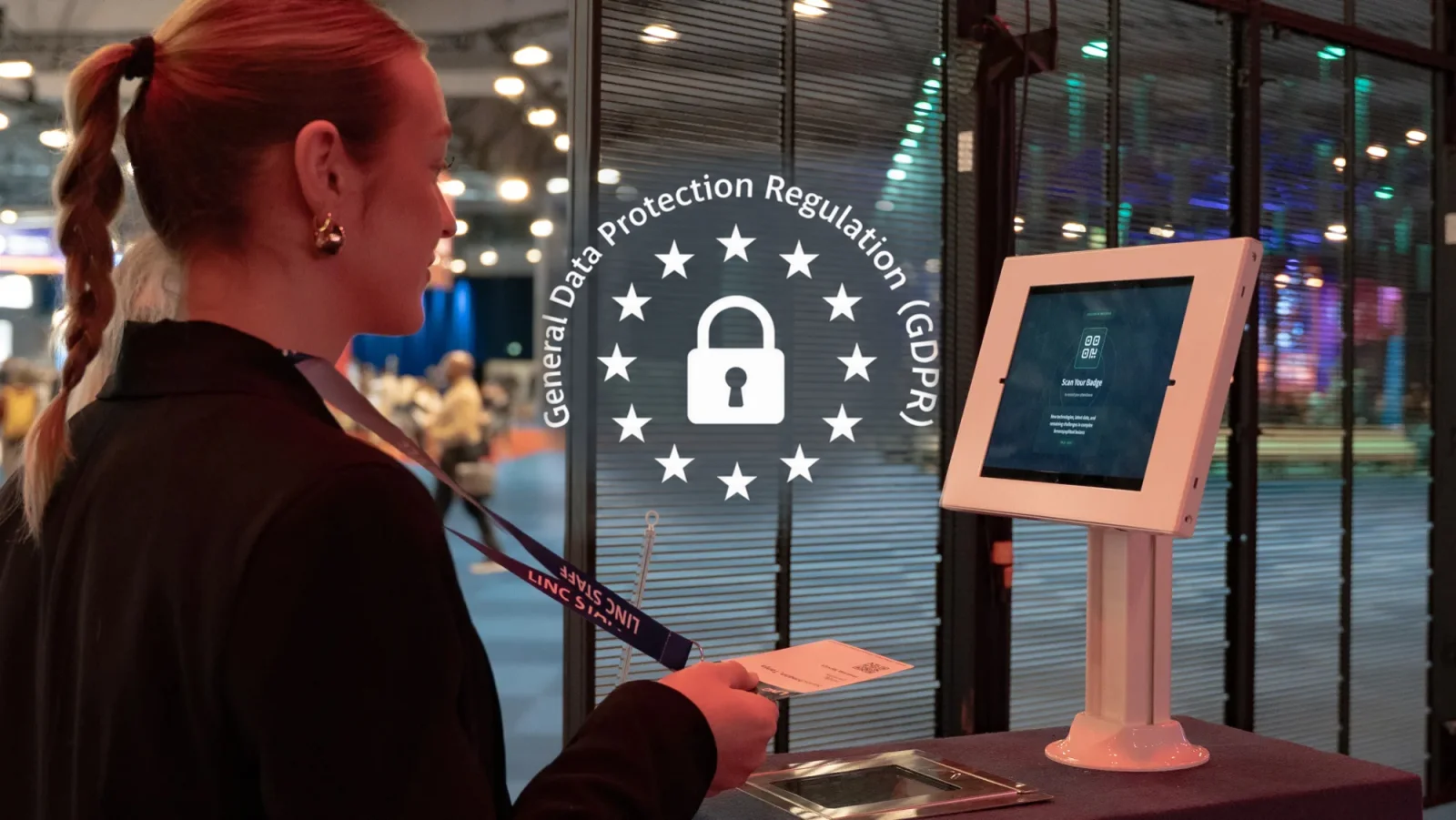
Organizing a conference involves collecting and processing a considerable amount of personal information. From attendee registration and speaker management to badge printing, networking and post-event communications, personal data is involved at almost every stage.
This means event organizers must comply with the General Data Protection Regulation (GDPR) whenever it applies to their activities.
GDPR is not limited to conferences taking place in Europe. It can also apply to events held elsewhere, depending on where the organizer or its service providers are established and whether their activities fall within the regulation’s territorial scope.
Although GDPR may appear complicated, many of its requirements come down to a few practical questions: What information do you really need? Why are you collecting it? Who can access it? And what happens to it when the event is over?
In this article, we look at the GDPR requirements most relevant to conference organizers, with practical examples from everyday event operations. We follow the event lifecycle — before, during and after the conference — to explain how personal information should be collected, managed, protected and eventually deleted.
1. Before the event: Collecting information responsibly
The most important GDPR decisions are often made long before the first attendee arrives. When setting up registration forms, managing faculty information or selecting service providers, organizers are already determining how personal data will be processed.
Collect only the information your event needs
Relevant GDPR articles: Article 5 — Principles of processing; Article 9 — Special categories of personal data
One of the fundamental principles of GDPR is data minimization: personal information should be limited to what is necessary for a specific purpose.
For a standard conference registration, organizers might need an attendee’s name, email address, ticket type and payment information. Other details, such as job title, company affiliation or telephone number, may be useful but are not always necessary.
The information required can also vary depending on the participant’s role. A speaker might need to provide a biography and presentation materials, while an exhibitor might need to provide company information. There is little reason to ask every attendee for the same details.
An example: Consider a conference that offers an optional networking dinner. Organizers may need to collect dietary requirements from attendees participating in the dinner, but there is no reason to ask this question of every person registering for the conference.
In Registration Town, organizers can configure forms with required and optional fields and display questions based on a participant’s registration choices. For example, when an attendee purchases a networking dinner add-on, the platform can follow up with a question about dietary requirements. The same approach can be used when a speaker accepts an invitation to a faculty dinner. This avoids collecting information that is irrelevant to a participant’s activities.
Understand when consent is required
Relevant GDPR articles: Article 6 — Lawfulness of processing; Article 7 — Conditions for consent
A common misunderstanding is that GDPR requires consent for every use of personal information. In reality, consent is just one of several legal bases for processing data.
For example, an organizer may need to process registration details to provide the conference services an attendee has purchased. Payment records and invoices may need to be retained to comply with accounting obligations.
Other activities, such as adding attendees to a marketing newsletter or sharing their contact details with sponsors for promotional purposes, require a separate legal assessment.
Organizers must identify the appropriate lawful basis for each processing activity. Where consent is required, it must be freely given, specific, informed and unambiguous. Attendees should also be able to withdraw it easily.
An example: An attendee registering for a medical conference may be presented with two separate optional choices:
- I agree to receive information about future editions of this conference.
- I agree to have my contact details shared with event sponsors for marketing purposes.
These are different activities and should not be bundled into a single consent request.
Registration Town allows organizers to manage consent choices for different purposes. This also applies to faculty management: a speaker’s participation in a conference does not necessarily mean that every detail of their profile should automatically appear on a public website.
Be transparent about how attendee data will be used
Relevant GDPR articles: Articles 12–14 — Transparency and privacy information
Attendees should understand what information an organizer collects, why it is needed, how it will be used and who may receive it.
This information should be provided in a clear and accessible privacy notice, before or during attendees submit their registration details.
For example, an organizer should explain whether information will be processed by a registration platform, payment provider or badge-printing service. If data will be shared with sponsors, the notice should explain the relevant purposes and arrangements.
The notice should also describe retention periods or the criteria used to determine them, the applicable legal bases and how attendees can exercise their rights.
A good privacy notice does not need to be unnecessarily complicated. It should help attendees understand what happens to their information without requiring them to interpret legal terminology.
Choose service providers carefully
Relevant GDPR articles: Article 28 — Processors; Article 30 — Records of processing activities
Most conferences rely on external providers to manage registrations, payments, emails, accommodation, badge printing and other services.
When a provider processes personal data on behalf of an organizer, GDPR requires appropriate contractual arrangements, generally through a Data Processing Agreement (DPA).
The organizer will typically act as the data controller, determining the purposes and essential means of processing. A registration platform such as Registration Town generally acts as a processor when handling attendee information on the organizer’s behalf.
At Summitware, we evaluate the external services involved in processing customer data and maintain a public list of our subprocessors and their purposes.
You can review the list here: https://summitware.be/legal/subprocessors/
Keeping appropriate documentation is another important responsibility. Article 30 requires records of processing activities in applicable circumstances. Such records typically describe the purposes of processing, categories of information, recipients, retention arrangements and relevant safeguards.
Registration Town allows organizers to add internal descriptions to individual data fields, documenting why information is requested. This can support internal accountability and broader record-keeping practices.
Protect personal information from the beginning
Relevant GDPR articles: Article 25 — Data protection by design and by default; Article 32 — Security of processing
Data protection should be considered when designing an event’s workflows.
For example, a staff member reviewing abstracts does not necessarily need access to attendee payment information. Similarly, someone managing on-site badge printing may not need permission to export the entire participant database.
Registration Town provides granular, role-based permissions so organizers can control which information different team members can access. The platform also supports passwordless authentication using passkeys, including biometric verification on compatible devices. Together with appropriate access controls, these measures help reduce the risks associated with shared credentials and unnecessary access to personal information.
2. During the event: Putting GDPR into practice
Before the event, organizers establish compliant procedures; during the event, they must follow and enforce those procedures in practice. Organizers must ensure that personal information is handled appropriately throughout on-site registration, attendee check-in, badge scanning, networking, photography and other activities.
Keep attendee information accurate and accessible only when needed
Relevant GDPR articles: Article 5 — Data accuracy and minimization; Article 16 — Right to rectification; Article 25 — Data protection by design
Registration desks are often busy environments. Staff need quick access to participant information, but this should not mean exposing complete attendee databases to everyone working at the event.
An example: An attendee arrives and notices that their company affiliation is incorrect. Rather than correcting the badge manually or maintaining a separate spreadsheet, registration staff can update the attendee record in Registration Town and print a corrected badge.
Keeping registration information in one system can reduce unnecessary duplication and make it easier to maintain accurate records.
Organizers should also avoid leaving printed attendee lists unattended, displaying sensitive information on public-facing screens or providing unrestricted access to registration systems.
The same principles apply to speaker management. If a speaker’s affiliation changes during the conference, organizers should ensure that the relevant information can be corrected in the systems and materials that use it.
When sharing attendee information through badge scanning
Relevant GDPR articles: Article 6 — Lawful basis; Article 7 — Consent; Articles 12–14 — Transparency
Badge scanning is common at conferences, particularly when exhibitors collect business leads or organizers track participation.
However, scanning a badge can involve sharing personal information with another organization. Attendees should understand what information is transferred and how it may be used.
For example, scanning a badge to verify entry into a workshop serves a different purpose from allowing an exhibitor to collect an attendee’s contact details for future marketing.
Registration Town supports badge scanning for event operations and exhibitor lead retrieval. Organizers should configure these workflows according to their intended purposes and explain the relevant data-sharing arrangements to participants.
Where consent is the applicable legal basis, attendees must have a genuine choice. Organizers must also consider applicable electronic marketing rules before exhibitors use the collected information for promotional communications.
The important distinction is not simply whether a badge is scanned, but why the information is being collected and what happens to it afterward.
Respect privacy during photography, livestreaming and networking
Relevant GDPR articles: Article 6 — Lawful basis; Articles 12–14 — Transparency
Conferences regularly involve photography, video recording, livestreaming and networking activities. These can all involve personal data. A privacy notice can provide further details about the purposes of recording, publication and retention.
Organizers should establish an appropriate legal basis and clearly inform participants when their images or personal information may be used.
Registration Town helps organizers respect attendees’ photography preferences during the event. If an attendee does not consent to being photographed, the system can print their badge in a different color, making them easily identifiable to event photographers.
Secure event operations and manage staff access
Relevant GDPR articles: Article 25 — Data protection by design; Article 32 — Security; Articles 33–34 — Personal data breaches
Conferences often involve a combination of permanent staff, temporary employees, volunteers, external technicians and service providers.
Each may need access to different systems, but not necessarily to the same information.
Individual staff accounts and role-based permissions help organizers control this access. They also reduce the need to distribute attendee information through email attachments, unsecured spreadsheets or personal messaging applications.
Registration Town can be used to manage registrations, badges and participant information in one environment instead of maintaining separate files for each operational team.
Slideshow City provides a centralized system for presentation management and delivery to conference rooms. This can reduce the need for organizers to distribute presentation files manually between room operators and technicians.
3. After the event: Managing information responsibly
The conference may be over, but the organizer’s responsibility for personal information continues.
Some data may still be needed for accounting, accreditation, certificates or future event planning. Other information, such as temporary catering requirements or operational spreadsheets, may no longer serve a purpose.
Decide what information to retain and what to delete
Relevant GDPR articles: Article 5 — Storage limitation; Article 17 — Right to erasure; Article 28 — Processors
GDPR does not prescribe a single retention period for all conference registration data.
Instead, information should be kept only as long as necessary for the purposes for which it is processed, unless an applicable legal requirement or other valid justification permits longer retention.
An example: After a medical conference, an organizer may need to retain attendance records for CME accreditation or certification requirements.
Financial records may need to be kept for statutory accounting periods.
On the other hand, dietary requirements collected for a networking dinner or temporary printed check-in lists may no longer be needed.
The same retention period should not automatically be applied to every category of information.
Registration Town supports event registration and attendance-related workflows, including the information needed for post-event certificates.
Use attendee information responsibly for future events
Relevant GDPR articles: Article 6 — Lawful basis; Article 7 — Consent; Article 21 — Right to object
Many conferences take place annually, and organizers naturally want to stay in contact with previous participants.
However, registering for one conference does not automatically authorize every form of future marketing.
Before sending promotional emails about next year’s event, organizers should establish a valid legal basis and comply with applicable electronic marketing rules.
Where consent is required, attendees should have provided it voluntarily. In certain circumstances, national rules may allow communications to existing customers under specific conditions.
Participants must also be able to object to direct marketing, and withdrawal of consent should be respected when consent is the legal basis.
Registration Town supports communication preferences and unsubscribe management, helping organizers distinguish between different types of messages.
For example, an operational email containing a participation certificate is different from a promotional newsletter advertising next year’s conference. These communications should not automatically be treated in the same way.
Organizers may also want to retain registration information to simplify participation in future editions. This can be possible when there is an appropriate lawful basis, a defined purpose and justified retention period.
Review access to archived event data
Relevant GDPR articles: Article 5 — Storage limitation and integrity; Article 25 — Data protection by design; Article 32 — Security
An event’s information may remain in registration systems long after the conference finishes.
Organizers remain responsible for deciding how their event data is used, while Summitware processes that data on their behalf. We provide a Data Processing Agreement and maintain a list of subprocessors.
Archived information must remain protected for as long as it is retained.
This is especially important for recurring conferences, where teams and service providers may change from one edition to another.
4. Common GDPR questions for event organizers
Can someone register an entire group and give consent on behalf of the attendees?
Group registrations are common at conferences. A company might register 20 employees, or a faculty coordinator might submit information on behalf of several speakers.
The difficulty arises when the registration process includes optional consent requests.
Where GDPR consent is required, it generally needs to come from the individual concerned or someone legally authorized to provide it. A colleague registering attendees does not automatically have authority to consent to marketing, sponsor sharing or other optional processing on their behalf.
An example: An employee arrives at a conference after being registered by a colleague. Their registration is complete, but they have not reviewed the privacy information or responded to optional consent requests.
Registration Town’s on-site badge-printing workflow can present an incomplete registration form on a touchscreen, allowing the attendee to review the outstanding information and make their own choices before the badge is printed.
This provides a practical way to handle incomplete registrations without assuming that the group coordinator can make every privacy-related decision for the attendee.
Can organizers share the final attendee list with sponsors?
Not automatically.
Organizers must establish a lawful basis for sharing personal information, explain the relevant purposes and consider how sponsors intend to use the data.
Sending an entire attendee database to sponsors after a conference may be difficult to justify, particularly if participants were not informed or the recipients intend to use the information for unrelated marketing.
A more controlled approach is to establish clear data-sharing arrangements and allow sponsors to collect relevant leads through appropriately configured event workflows.
Registration Town’s lead retrieval functionality allows exhibitors to collect attendee information through badge scanning. Organizers remain responsible for assessing the legal basis, providing transparency and ensuring that subsequent use complies with applicable rules.
Can organizers send certificates, CME records and feedback surveys after the conference?
Generally, yes, provided the processing has an appropriate legal basis.
Attendance certificates and CME documentation can be part of delivering the services associated with a conference.
Registration Town supports post-event certificates and attendance-related workflows, allowing organizers to manage these processes using information collected during the event. Feedback surveys may also be permissible, but the legal basis and communication rules should be assessed in light of their content and purpose.
Conclusion: GDPR is an ongoing responsibility
GDPR compliance is not a single checkbox on a registration form. It begins when organizers decide what information their event needs and continues through registration, speaker management, on-site operations, sponsor activities, follow-up communications and eventual data deletion.
One of the challenges is maintaining control of personal information as it moves between registration systems, spreadsheets, emails and different event teams.
Every additional copy or unnecessary transfer can make that information harder to manage and protect.
By bringing registration, attendee management, badges, speaker workflows and other event operations into connected systems, organizers can reduce unnecessary data transfers and maintain clearer control over who can access information.
Registration Town and Slideshow City are designed to support these workflows, helping organizers manage their conferences while maintaining appropriate control over personal data.
Ultimately, GDPR compliance remains the organizer’s responsibility, supported by the policies, processes and technology used throughout the event.
This article provides general information about GDPR obligations in event organization and does not constitute legal advice. Requirements may vary depending on the processing activity, applicable national law and the circumstances of the event.